|
Hugging face hack, Nvidia’s’ rising climate impact and an humane web round up
|
Welcome back to Curiously Green.
This month I’ll be rounding up some of the best writing about some of the biggest stories from over the summer as well as highlighting a few things that you might have missed.
No preamble this month let’s dive straight back in!
Andy Davies
Curiously Green Manager – Wholegrain Digital
|
|
The Hugging Face Hack
|
In terms of column inches, Open AI’s admission that its AI agents had hacked into Hugging Faces’ systems was one of the bigger tech stories of the summer. Open AI framed this as a rogue action and proof that their models were almost too powerful to contain or control. Proof perhaps that the hype around GenAI is warranted.
This was the line taken by many in the mainstream press, with headlines talking about AI Agents “gone rogue”.
The true story seems to be one of human failure rather than agents with agency acting with impunity. In Eryk Salvaggio’s piece The System From Nowhere he points out that “When you expand the boundary of the system to include the people building and deploying it, the case becomes much less science fiction and more like incompetence.” The people who had programmed the agents and set them running with access to a live internet connection were really to blame.
MIT Technology review takes a similar view and suggests that these failures reflect cultural issues within the organisation. “What OpenAI’s report fails to address is why a company that develops such high-risk systems did not prevent this severe communication breakdown, though Mowshowitz has his suspicions. “All these different failures are all pointing in the same direction, which is that the safety culture at OpenAI doesn’t exist or is anemically weak,” he says.”
The most caustically entertaining report of the incident came from Cory Doctorow. “The Hugging Face hack isn’t a mysterious, supernatural occurrence. It’s a Python loop and a chatbot. The people responsible didn’t accidentally create god: they created autonomous malicious software and then failed to closely monitor it, resulting in it doing something both foreseeable and bad.”
So while the incident is obviously bad, it’s not the foreshadowing of AGI.”
|
|
NVIDIA’s growth comes at a huge environmental cost
|
Elsewhere in AI news Sustainability journalist and researcher Ketan Joshi has released a new report into the environmental impact of NVIDIA’s growth. The report comes from a partnership including Greenpeace, Friends of the Earth and the Green Web Foundation, and found that NVIDIA’s Scope 3 emissions have risen by 725% since 2020. Despite (or perhaps because of) their hugely profitable growth, NVIDIA resorted to greenwashing tactics to justify the huge environmental harm caused by their outputs.
|
|
|
|
|
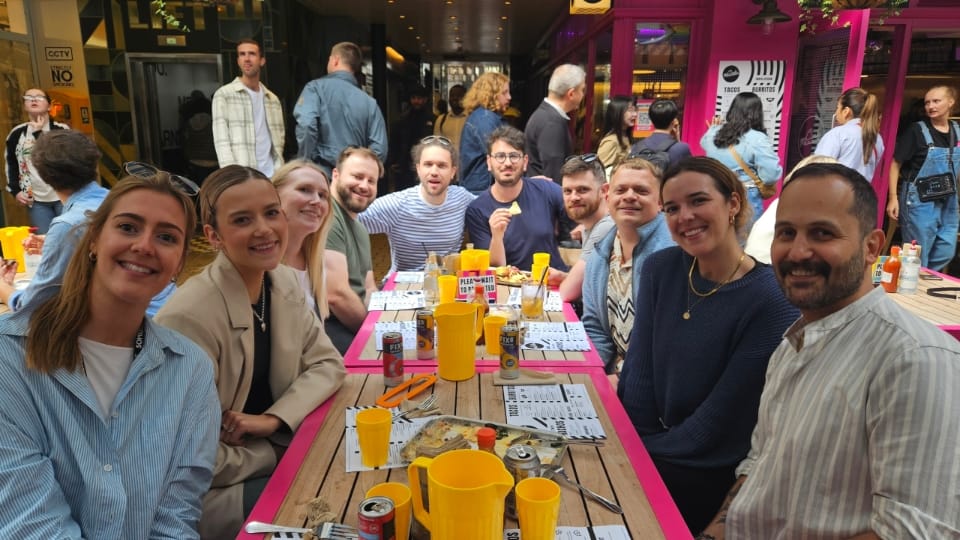
As is the natural order of things, we are saying goodbye to two dear team members. That means we have two roles available for the right people:
A
Client Success Manager to help our account management team build strategic, trusted and lasting relationships with the brilliant organisations that we work with.
A Digital Designer to join our Experience Design team. This role helps define creative solutions for the purpose driven organisations we partner with.
Our recruitment process is designed to avoid unconscious bias so if you’re interested in a role, please apply via the links above..
|
|
|
We want to hear from you!
|
|
Remember to share what you’ve seen, and/or been up to this month and your plans for the rest of 2026 and beyond.
Don’t forget, we want to hear more from you, the Curiously Green community! If you’re heard or read something that may be of interest, please share any links, and your thoughts with us.
Even better, we’d love to know what you’re working on. If you have any case studies or projects you’d like to share, or new approaches you’ve tried that may be of interest, this is a great way to share with like minded folk so please head over to our submission form and tell us all about it!
We can’t wait to hear from more of you. 💚
|
|
|
-
CSS Tricks
When I’m not writing words I’m writing code. As a self taught web developer, I’ve spent a lot of time reading articles and how to guides to help me keep up with the latest developments and features available for website builds.
Sites like CSS Tricks are invaluable to an open web, helping countless developers solve problems and grow as digital professionals.
It’c concerning then that the site’s parent company, AI cloud operation, DigitalOcean has seemingly withdrawn funding and support for the site.
The predicament was brought to my attention in this post from developer and writer Vale, and summed up wonderfully by Andy Bell of Set Studios. “without people at the top of their game sharing their experience and knowledge — regardless of whatever “game changing” technology is in place — we are pulling up the ladders and committing our industry to stagnation and death”.
For the sake of a healthy open web I hope a solution can be found
-
AI Crawlers
The impacts of AI crawlers has been a theme over the summer.
At the start of the summer, the Green Web Foundation wrote about the stress AI bots place on the broader internet and what webmasters can do about it.
One thing webmasters can do is to use Cloudflare’s new functionality. These new features allow site managers to be more granular in their approach to where bots are allowed to visit a site and what they can do while they are there. We’ve written a piece explaining the new options and why they are so important here.
-
Accessibility and Sustainability toolkit
Sustainability and Accessibility specialists Drum have released a brilliant toolkit of (surprise, surprise) accessibility and sustainability related resources, factsheets and webinars! They are brilliant and worth checking your knowledge against.
Thank you to Drum for helping make the web a more inclusive place.
-
Responsible AI webinars
More free resources, this time from Climate Action Tech.
They’ve been running an insightful Responsible AI series with the support of ustwo. You’ll find write ups and recordings of the sessions on the CAT blog here.
-
The future of website carbon calculators
When Fershad Irani writes something, you read it, those are the rules. His latest piece looks at the future of website carbon emissions and how they are measured. It’s a must read for anyone who has ever used tools like Website Carbon and wondered about the technology behind it and how it might be improved.
-
Small Language Models
Finally, an interesting write up of the best small language models (SLMs) available at the moment. If you’re looking for AI solutions that don’t require resource hungry frontier models, check out these recommendations.
|
|
|