Welcome to the summer issue of Curiously Green.
As ever we’ll be taking a pause next month for a bit of a recharge before our next issue in September.
A recharge will be welcome as I’ve found July to have been full of climate anxiety. Multiple historic heat waves across the UK and Europe and devastating wild fires in Spain, France and the UK have made for grim reading. It can feel like the world carries on regardless, without heeding the warnings plastered all over the news. On the 23rd July 2026 as nearly 250,000 people in the Gironde and Landes departments of France were being evacuated away from wild fire danger, the FlightRadar24 website recorded more than 153,000 commercial flights in that 24 hour period, a new record.
I find it hard to view these two facts in isolation.
It’s some small comfort to work for an agency that takes the climate crisis seriously. We’ve written recently about some simple climate actions you can take and how we’re supporting organisations who are working to combat the climate crisis. August often marks a quieter work period, so why not take one of those simple climate actions such as finding a screening of the National Emergency Briefing on the climate and nature crisis, reading some of the amazing analysis on the new Carbon Brief website, or seeing how you can support the Green Web Foundation’s Fossil Free Web campaign.
With all the climate gloom in the news, I’ve spent the past month looking for Humane and Open Web stories and resources to share. You’ll find podcasts, book recommendations, developer resources, thought provoking articles and more.
If you’re taking some time off in in the next month, I wish you a relaxing and restorative break.
See you back on the beat in September.
Andy Davies
Curiously Green Manager – Wholegrain Digital
|
|
|
Open and Humane Web summer special
|
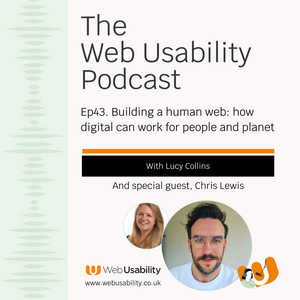
WebUsability Podcast
|
I can think of no better place to start than by sharing a podcast starring our very own MD Chris Lewis. He spoke to Lucy Collins, director of WebUsability and Co-Founder of CollectivAlly (one of the few AI services I feel cautiously optimistic about) to explain the idea of the Humane Web and why good digital experiences should respect both the people using them and the planet we all share. The conversation covers digital accessibility, sustainability and human centered design as well as topics like why agencies should be braver when trusting users.
It’s a lovely distillation of the direction Wholegrain believes the digital sustainability movement should follow.
Get it queued up for your next dog walk or evening stroll.
|
|
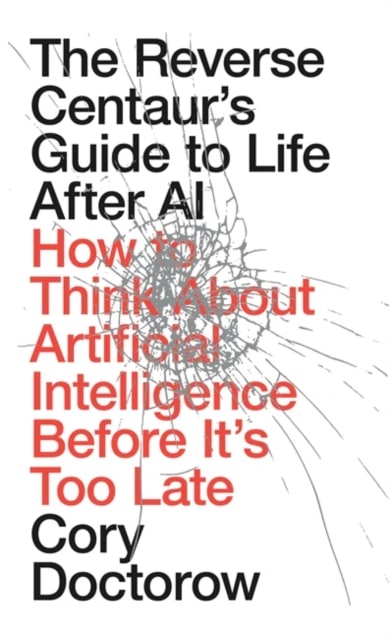
Cory Doctorow
|
During my break from newsletter publishing I’m looking forward to reading Cory Doctorow’s latest non-fiction offering “The Reverse Centaurs Guide to Life After AI”. Doctorow is one of the sharpest writers on tech I know and is internet famous for having coined the term “Enshittification”. Like many readers of this newsletter he’s a supporter and daily user of digital technologies, but is also concerned with erosions of digital privacy and free speech as well as being a vocal critic of business practices of GenAI and big tech companies. His work with the Electronic Frontier Foundation helps him fight for this cause.
If you want a primer on his views on AI, this podcast provides a compelling and entertaining insight.
If you prefer a written media the book is available here or read his brilliant daily threads on BlueSky. Let me know what you think of the book if you do read it.
|
|
Code for the People
|
A theme of this years’ newsletters has been the, erm, unsportsmanlike behaviour of the big tech firms that shape today’s internet. WordPress powers around 40% of the internet (and all the sites Wholegrain build and maintain for that matter), so I’d argue that Automattic, the company behind WordPress, counts as big tech too.
I haven’t agreed with every decision they’ve made (disbanding their sustainability team for instance) but I do love their recent documentary Code for the People.
It’s a historical love letter to the open web it describes as “arguably the world’s most vital invisible utility.” It’s also a call to action against “a handful of digital landlords use algorithms to dictate our reality”.
Watch the film and see if it moves you to participate in one of the 5 ways they suggest to keep the web open in the Build the open web section of the film’s website.
|
|
|
New impact framework for the Web Sustainability Guidelines
|
Wholegrain are big advocates of the Web Sustainability Guidelines. They’re crowd sourced and work towards a more ethical, humane and inclusive web. Dense, well researched and comprehensive they may be but they have not always been entirely accessible to the lay person. In fact they’ve been tricky to approach for digital sustainability practitioners if I’m honest. Thankfully they are overseen by a dedicated, talented and open team and things have been slowly improving since its inception.
The latest leap forward comes in the form of an impact framework. In the past it’s been difficult to work out where to begin and where you can make the most impactful actions. When searching for action to take on your website you can now filter according to high, medium, low and indeterminate impacts across People, Planet and Prosperity categories, as well as required time frames.
As Fershad Irani puts it in his write up of the changes, the update has achieved what it sets out to – “to make the WSGs a little bit more approachable by having a way to prioritise them“.
|
|
|
The future of the website
|
Having read Tom and Michael’s post about if we should still be designing websites for humans, I found this piece from web entrepreneur Joost de Valk to be an insightful companion piece.
His view is that websites have never just been for humans, they’ve always been for bots as well. Not though, humans are starting to use websites differently and the bots visiting are wholly different beasts. The piece covers topics like technical excellence, changes in what “conversion” will mean and where it happens and the evergreen importance of authenticity for websites and content.
Give the article a read and have an explore of Joosts’ extremely handsome and insightful website afterwards.
|
|
|
The Recarbonisation of the internet.
|
I said this issue would all be about the open web and this recommendation might make me a liar, but it’s too good not to include. Chris Adams of the Green Web Foundation in discussion with Sustainability focussed CTO Oliver Cronk on the Recarbonisation of the internet. The discussion is great but I’m most struck by the term Recarbonisation as a catch all for the rising emissions being reported by big tech. It’s a genius bit of terminology.
Will Recarbonisation become the new Enshittification or are they two symptoms of the same disease?
|
|
|
Are Publishers preparing to opt out of Google search?
|
Discoverability is a key tenet of the open web. So what should we do when a previously vital source of traffic dries up? Especially if that source has arguably become hostile to your organisation’s future?
That’s the question some digital publishers are asking themselves according to this article from Adweek. The idea of blocking Google access to your site would have been unthinkable in the past. But with organic traffic falling and original web content being regurgitated by search engines like Google, with little discernible upside for the contributors, the once unthinkable is looking like a more viable option.
From mid September Cloudflare will block all “multi-purpose crawlers” from accessing free tier customers and new websites signing up to the service. Chief Strategy Officer, Stephanie Cohen sees this necessary because platforms like Google are not providing “a technical solution that allows you to be discoverable without having to give your content away for free”.
If large scale web publishers choose this nuclear option it’s going to be an interesting autumn.
|
|
|
Make your website more effective with with No- or Lo-JS options
|
Finally some homework.
This repository from web developer Aaron Grogg is an attempt to fight the JS bloat present on so many modern websites. HTML and CSS has come on leaps and bounds in recent years and often offers lower weight alternatives to older JS solutions. It’s a collection of components, including common patterns like animated carousels and image comparison sliders.
Note that not all the solutions are widely available on all browsers, but don’t let that stop you from having a play around with the possibilities.
|
|
|
|
|
Do you have an event, article or resource that would be of interest to our readers?
|
Don’t forget, we want to hear more from you, the Curiously Green community. If you’re heard or read something that may be of interest, please share any links, and your thoughts with us.
Even better, we’d love to know what you’re working on. If you have any case studies or projects you’d like to share, or new approaches you’ve tried that may be of interest, this is a great way to share with like minded folk so please head over to our submission form and tell us all about it.
We can’t wait to hear from more of you. 💚
|
|
|
Curiously Green is curated by Andy Davies with input from the Wholegrain team and the Curiously Green community
|
|
|
|